
The Acropolis of Athens ✨
Stand where democracy took shape, where temples honored the gods, and where architects created buildings that still influence design 2,500 years later.
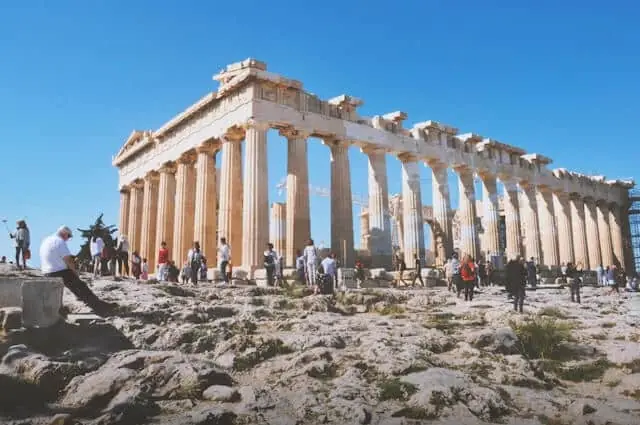
What is the Acropolis?
The Acropolis of Athens is an ancient citadel on a rocky limestone plateau that rises about 156 meters above sea level in the heart of the modern Greek capital. The word “Acropolis” comes from the Greek ἄκρον (akron, meaning “highest point” or “upper”) and πόλις (polis, meaning “city”) - literally, the “upper city”.
This UNESCO World Heritage Site represents the high point of classical Greek architecture: a sacred precinct where temples honored the gods and where architects and sculptors set standards that influenced Western building for centuries. It is considered the greatest and finest sanctuary of ancient Athens and was the site of the city’s greatest religious festival, the Panathenaia.
Built primarily during the 5th century BCE under the leadership of Pericles, the Acropolis evolved from a fortified hilltop into the religious and civic center of ancient Athens. The Acropolis monuments are masterpieces of ancient Greek architecture.
Today, its monuments - the Parthenon, Erechtheion, Temple of Athena Nike, and Propylaea - draw millions of visitors each year. These monumental buildings made the Acropolis one of the great cultural centres of the ancient world, and they continue to inspire visitors today.
Book the best Acropolis ticket
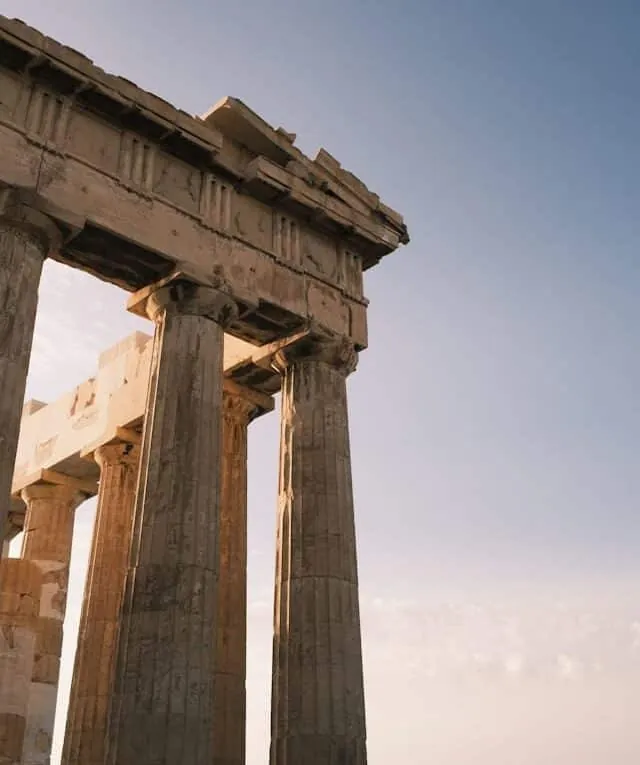
Acropolis & Parthenon Tickets with Optional Audio Guide
Skip the ticket lines and step into ancient history at your own pace. Explore the iconic Parthenon, Temple of Athena Nike, and Theatre of Dionysus with a multilingual audio guide that reveals the myths, legends, and stories behind Athens' most treasured monuments.
Includes:
- Timed entry to the Acropolis
- Audio guide in English, French, German, Spanish & Italian
- Offline audio guide and map on your phone
Best price starting at:
39 €
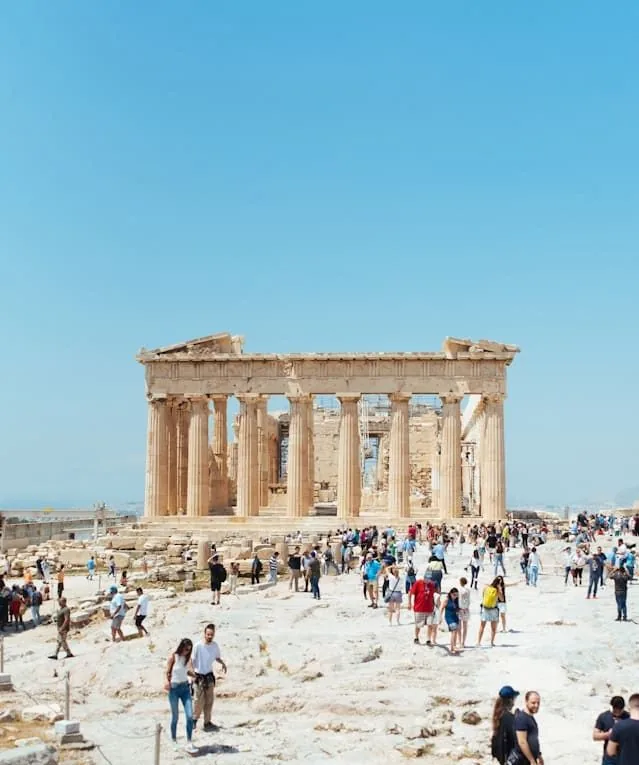
Acropolis & Parthenon Guided Tours with Entry Tickets
Explore the Acropolis with an expert guide who brings ancient history to life. Small groups, headsets for clear audio, and plenty of time for questions and photos. Enhance your visit with optional add-ons like the Acropolis Museum, Ancient Agora, or a walk through Plaka.
Includes:
- Guided tour of the Acropolis & Parthenon
- Skip-the-line entry
- Guide in English, Spanish, French, German, or Italian
Best price starting at:
34 €
Combo: Acropolis & Parthenon + Acropolis Museum Tickets
One plan, two iconic sites. Walk through the Acropolis hilltop monuments with reserved timed entry, then explore the Acropolis Museum, all connected by multilingual audio guides on your phone with offline maps, narration, and interactive content.
Includes:
- Time-slotted e-ticket to the Acropolis & Parthenon
- Entry ticket to the Acropolis Museum
- Audio guide in English, German, French, Spanish, Italian & Greek
Best price starting at:
75 €
The story of the Acropolis of Athens
From fortress to sanctuary
Before the temples, the Acropolis was a Mycenaean fortress. Archaeological evidence shows that the hill has been inhabited since the Neolithic era, around 4000 BCE. Its first fortifications date to the Late Bronze Age (Mycenaean period) in the 13th century BCE.
Mycenaean rulers enclosed the hill with massive walls, fragments of which still survive beneath later construction. In the centuries that followed, the fortress gradually became a sanctuary: by the 8th century BCE and throughout the Archaic period, the Athenians worshipped their gods, above all Athena, on the hilltop.
The transformation began in the 6th century BCE when the first monumental buildings and temples stood on the site. During this period the sanctuary flourished, and numerous opulent votive offerings, including bronze and terracotta statuettes, were dedicated to Athena. Persian invaders destroyed these early structures in 480 BCE. The rebuilding that followed created the monuments we see today.
The Golden Age
After defeating the Persians, Athenian statesman Pericles launched an ambitious building project in the mid-5th century BCE. Between 447 and 406 BCE, architects Iktinos, Kallikrates, and Mnesikles created monuments that would influence Western architecture for centuries. The new Acropolis was a showcase of how ancient architecture combines innovative design and classical art, reflecting the glory of Athens’ Golden Age.
The Parthenon came first: it was built between 447 and 438 BCE, and its sculptural decoration was finished by 432 BCE. The Propylaea gateway, Erechtheion, and Temple of Athena Nike followed. Each building combined mathematical precision with optical refinements that architects still study today.
Centuries of change
The Acropolis has seen every era of Mediterranean history. Romans added their own contributions. In the 6th century CE, Christians converted the Parthenon into a church. Ottoman rulers transformed it into a mosque and stored gunpowder inside - until a Venetian bombardment in 1687 ignited the arsenal and blew out the building’s center.
The ruined temples and monuments on the Acropolis bear witness to centuries of destruction and rebuilding. In the Middle Ages the hill served as a fortified town and seat of local rulers, and during the Ottoman period it was the headquarters of the Turkish garrison.
The Acropolis also played a role in the Greek War of Independence: in 1822 Odysseas Androutsos became its first Greek garrison commander. Once the hill was handed over to the newly founded Greek state, modern restoration began in the 19th century, and it continues today.
Acropolis highlights
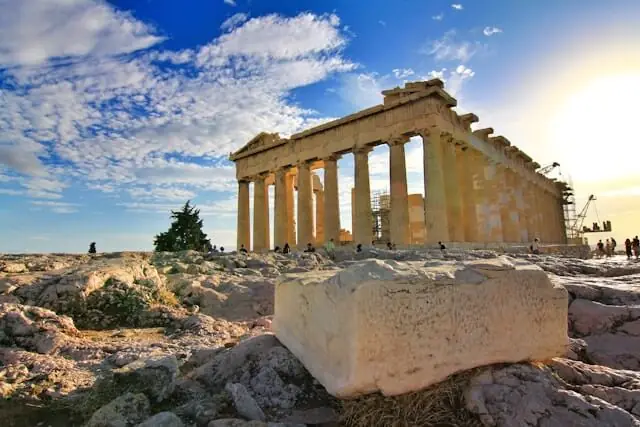 The Parthenon
 is the largest temple on the Acropolis, dedicated to Athena Parthenos - the virgin goddess who protected Athens. It once held a 12-meter statue of the goddess, her skin made of ivory and her robes of hammered gold.
Architects Iktinos and Kallikrates designed the building with subtle optical corrections. The columns lean slightly inward. The floor rises gently toward the center. What appear to be straight lines are actually curves. These refinements make the building appear perfectly proportioned to the human eye.
The roof, painted decorations, and cult statue are gone, but the Parthenon remains the most recognized symbol of ancient Greece. Some surviving sculptures from the Parthenon can be seen in the Acropolis Museum.
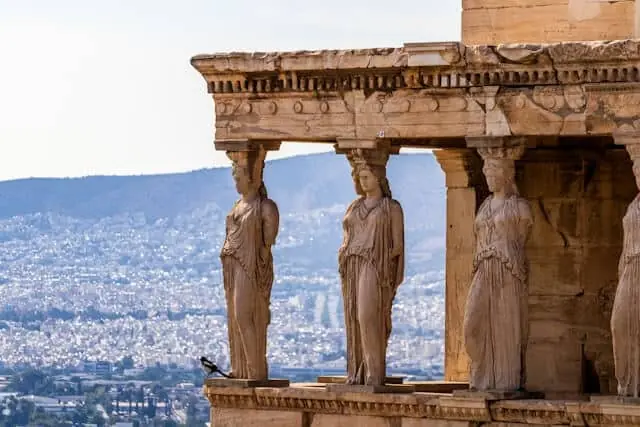 The Erechtheion
Built between 421 and 406 BCE, the Erechtheion sits on the most sacred ground on the Acropolis - the spot where Athena and Poseidon supposedly competed for patronage of the city.
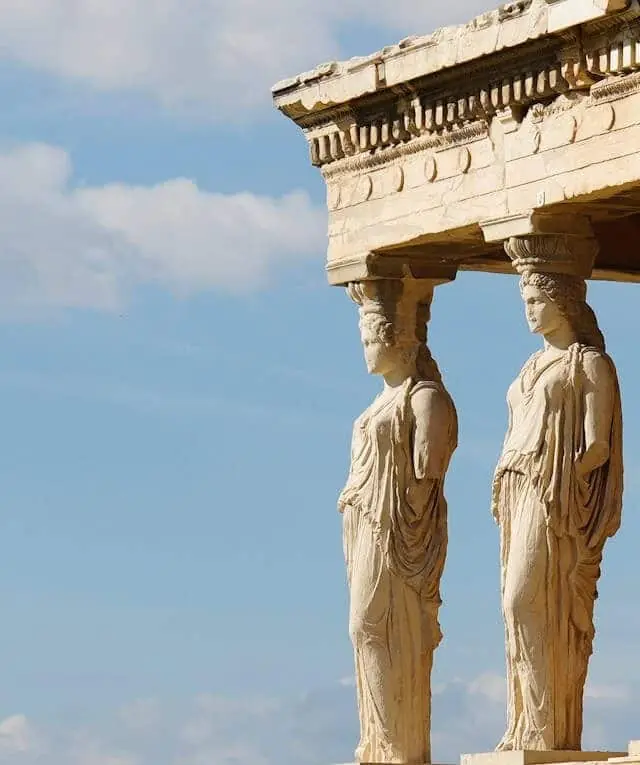
The building's famous Porch of the Caryatids features six marble women serving as structural columns, their draped robes flowing into fluted supports. Five of the originals are now in the Acropolis Museum and one is in the British Museum in London - the figures on site are replicas.
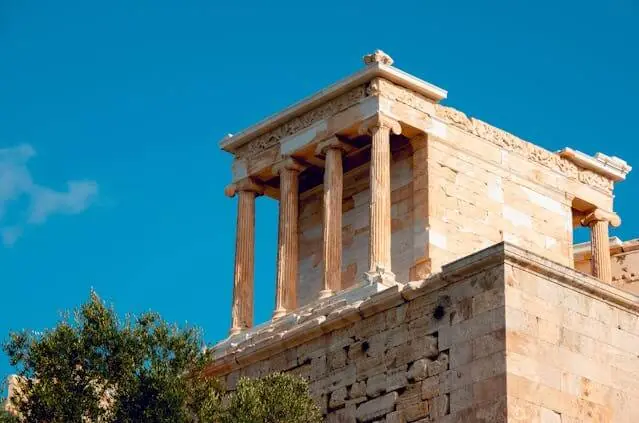 Temple of Athena Nike
This small Ionic temple sits on a bastion overlooking the approach to the Acropolis. Built from about 427 BCE and completed by about 420 BCE, it honored Athena as goddess of victory.
The temple's friezes depict battles between Greeks and Persians. Its position meant every visitor to the Acropolis passed it first.
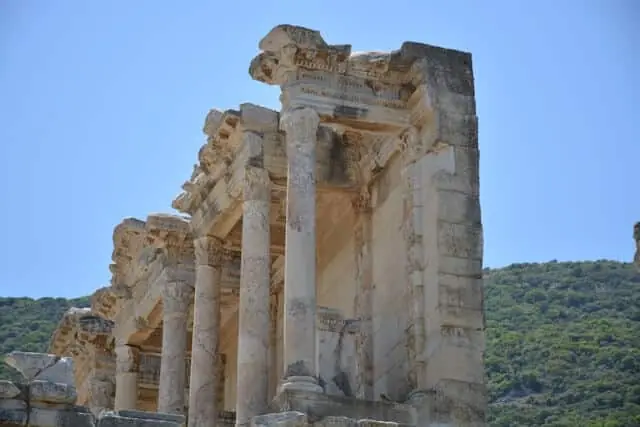 The Propylaea
 is not a temple but a gateway - the monumental entrance to the Acropolis. Architect Mnesikles built it between 437 and 432 BCE.
Six Doric columns frame the central passage, while Ionic columns support the interior ceiling. The building was never fully completed - the Peloponnesian War interrupted construction - but it remains impressive.
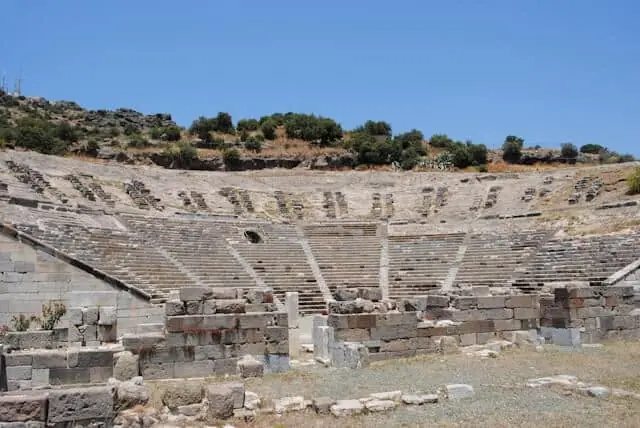 Theatre of Dionysus
Carved into the south slope of the Acropolis, the Theatre of Dionysus is where Western drama began. Here, in the 5th century BCE, playwrights Aeschylus, Sophocles, Euripides, and Aristophanes premiered works that are still performed today.
Stone seating replaced the original wooden benches in the 4th century BCE, when the theatre held about 17,000 spectators. Its semicircular layout became a model for theatres ever since.
Plan your visit to the Acropolis of Athens
The Acropolis opens at 8:00 AM daily. Summer hours (April through August) extend to 8:00 PM, while winter hours (November to March) end at 5:00 PM.
September and October have gradually earlier closing times as daylight decreases. Last entry is always 30 minutes before closing.
The Acropolis is in central Athens, visible from most neighborhoods. The main entrance is on the west side at the end of Theorias Street; a second entrance on the southeast side is on Dionysiou Areopagitou Street, next to the Theatre of Dionysus.
Metro stations Acropoli (Line 2) and Monastiraki (Lines 1 & 3) are both a short walk away. The climb involves uneven ancient pathways - wear sturdy, closed-toe shoes.
The Acropolis Museum sits opposite the archaeological site. Opened in 2009, it houses over 4,000 artifacts from the Acropolis and its slopes - including the original Caryatids from the Erechtheion and fragments of the Parthenon frieze. The museum requires a separate ticket but has a rooftop terrace with direct views of the Acropolis.
Experience the Acropolis of Athens
The Acropolis is more than an archaeological site. The Parthenon shows what Athenians built to honor their patron goddess. The Theatre of Dionysus is where Greek drama began. The Propylaea marks the entrance to what was once sacred ground. The Acropolis housed primarily temples dedicated to Athena and served as the setting for some of the most celebrated myths of ancient Athens.
Walking these paths, you’re following routes used by philosophers, priests, and citizens over two and a half thousand years ago. That’s what draws millions of visitors to this limestone hilltop - the chance to see where much of Western culture started. Secure your Acropolis tickets early, especially in peak season, to make the most of your visit.
Frequently asked questions
01 What is the Acropolis?
The Acropolis is an ancient citadel built on a rocky plateau above Athens, Greece. The word comes from Greek and means “upper city.” The Acropolis of Athens contains famous monuments including the Parthenon, Erechtheion, Temple of Athena Nike, and Propylaea. It served as the religious, political, and cultural center of ancient Athens during the 5th century BCE and is now a UNESCO World Heritage Site.
02 What is the Acropolis of Athens famous for?
The Acropolis is famous for containing the best surviving examples of classical Greek architecture, particularly the Parthenon. The site’s monuments influenced architecture across the Western world for over two thousand years. Today it’s Greece’s most-visited landmark.
03 What does Acropolis mean?
Acropolis means “upper city” or “high city” in ancient Greek. The word combines “akron” (highest point, upper) with “polis” (city). Many Greek cities had an acropolis - a fortified citadel on elevated ground - but the Acropolis of Athens became so well-known that the term now commonly refers to this specific site.
04 When was the Acropolis of Athens built?
The major monuments visible today - the Parthenon, Propylaea, Erechtheion, and Temple of Athena Nike - were built between 447 and 406 BCE during the Golden Age of Athens under Pericles.
However, the site has been inhabited since the Neolithic era, around 4000 BCE, and its long history includes Mycenaean fortification walls from the 13th century BCE and later additions in the 3rd century CE.
05 Why was the Acropolis built?
The Acropolis served different purposes over time. It was originally a fortified citadel for defense, then evolved into Athens’ religious center, dedicated primarily to the goddess Athena. The 5th-century BCE building program under Pericles was meant to showcase Athenian wealth and power following victory over Persia.
06 What is the difference between the Acropolis and the Parthenon?
The Acropolis is the entire hilltop complex containing multiple structures. The Parthenon is one specific temple within that complex - the largest and most famous, but only part of the site. The Acropolis also includes the Erechtheion, the Temple of Athena Nike and the Propylaea gateway, while the Theatre of Dionysus and the Odeon of Herodes Atticus lie on its south slope.
In addition to these, the site features smaller sanctuaries and other structures.
07 How old is the Acropolis of Athens?
The site has been inhabited for about 6,000 years, with evidence of settlement dating to around 4000 BCE. The famous classical monuments are roughly 2,500 years old, built between 447 and 406 BCE.
08 Can you go inside the Parthenon?
No. The temple interior is closed to the public for preservation and ongoing restoration. Visitors can walk around the exterior and view it from all angles. The Acropolis Museum has a gallery displaying original Parthenon sculptures at their original height.
09 How long does it take to visit the Acropolis?
Plan about 1.5 - 2 hours for the Acropolis itself, for example on a self-guided visit with an audio guide. Guided tours typically run about 2 hours. If you also explore the theatres on the south slope, allow about 2.5 - 3 hours. Adding the Acropolis Museum extends your total time to about 4 hours (half a day).
10 Is the Acropolis of Athens worth visiting?
Yes. It’s one of the most significant cultural landmarks in the world, with well-preserved examples of classical Greek architecture that influenced building design for centuries. The site also offers panoramic views across Athens.